
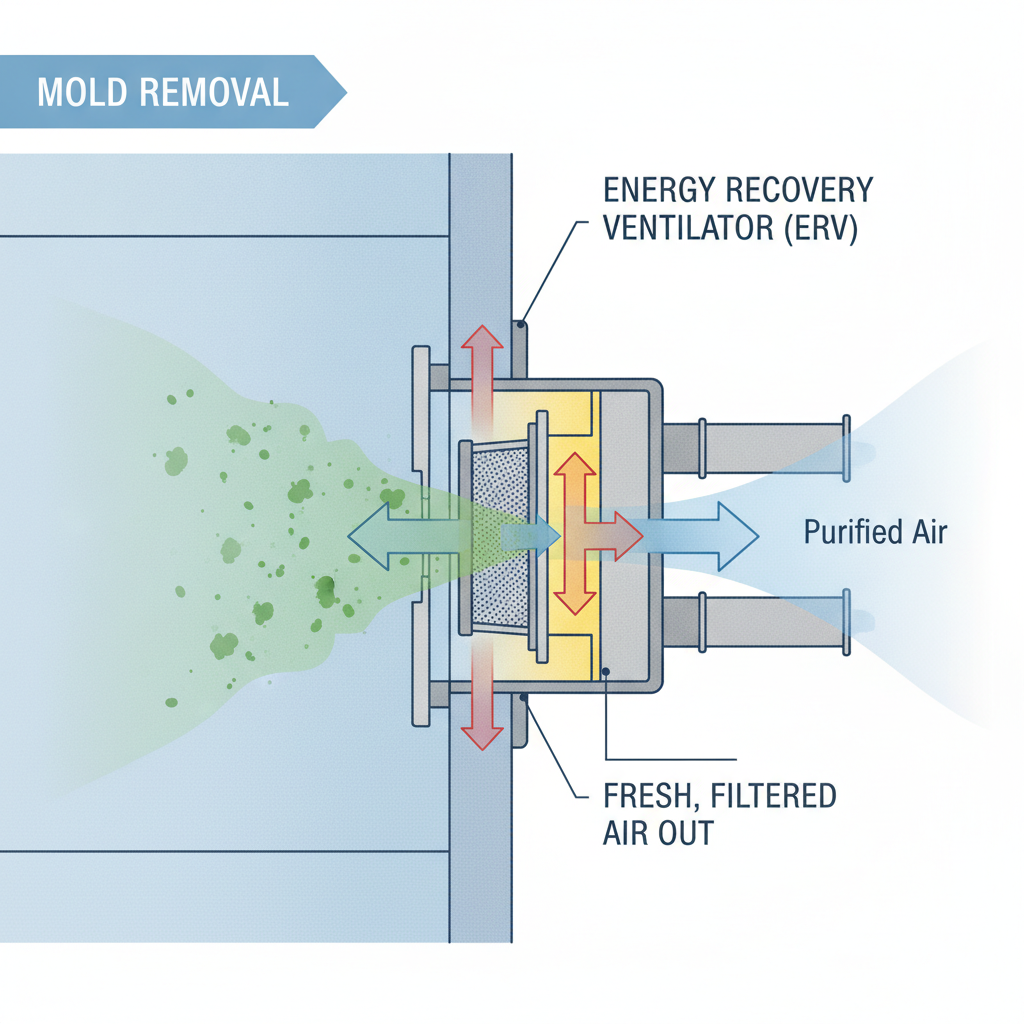
Modern home construction has reached a point of extreme airtightness, creating a critical need for balanced mechanical ventilation. While traditional exhaust-only ventilation systems function by pulling stale air out, they inadvertently create negative interior air pressure. This vacuum effect forces hot, humid exterior air to infiltrate the building envelope through microscopic cracks and gaps. When this warm, moisture-laden air meets the cooler surfaces within walls and ceilings, it reaches its dew point, leading to interstitial condensation that serves as a primary catalyst for structural rot and toxic mold growth.
Energy Recovery Ventilators (ERVs) offer a sophisticated alternative by prioritizing pressure equilibrium. By simultaneously exhausting stale indoor air and introducing filtered, tempered outdoor air, an ERV maintains a slightly positive pressure environment. This subtle shift prevents unconditioned air from being sucked into the building assembly, effectively keeping the wall cavities dry and stable. Because the system utilizes a heat exchanger to pre-condition incoming air, it achieves this moisture control without placing an undue burden on the home’s HVAC system.
As we continue to push toward net-zero building standards, the transition from simple exhaust ventilation to balanced, pressure-managed systems is no longer a luxury but a necessity for building longevity. By shifting the focus from merely removing air to carefully managing the pressure dynamics of the home, homeowners can ensure their living spaces remain not only energy-efficient but structurally sound for decades to come. Moving forward, the integration of balanced ventilation will remain the gold standard for creating healthier, more resilient residential environments.